Call Us
Tell us what's happening. A real electrician picks up — evenings, weekends and bank holidays included.
Brighton + Hove + Sussex
Oven trips the moment it heats up? Hob dead but everything else in the kitchen's fine? Cooker circuits carry serious current, and when they fail they fail in their own particular ways. We diagnose and fix them safely, day or night.
30 Google Reviews
Call Now — 24/7 0333 360 6904Fast
60-Min Average Response
Upfront
Fixed-Price Quotes
Guarantee
On All Workmanship
Stocked
Vans Ready to Fix Today
Cooker & Hob Circuits
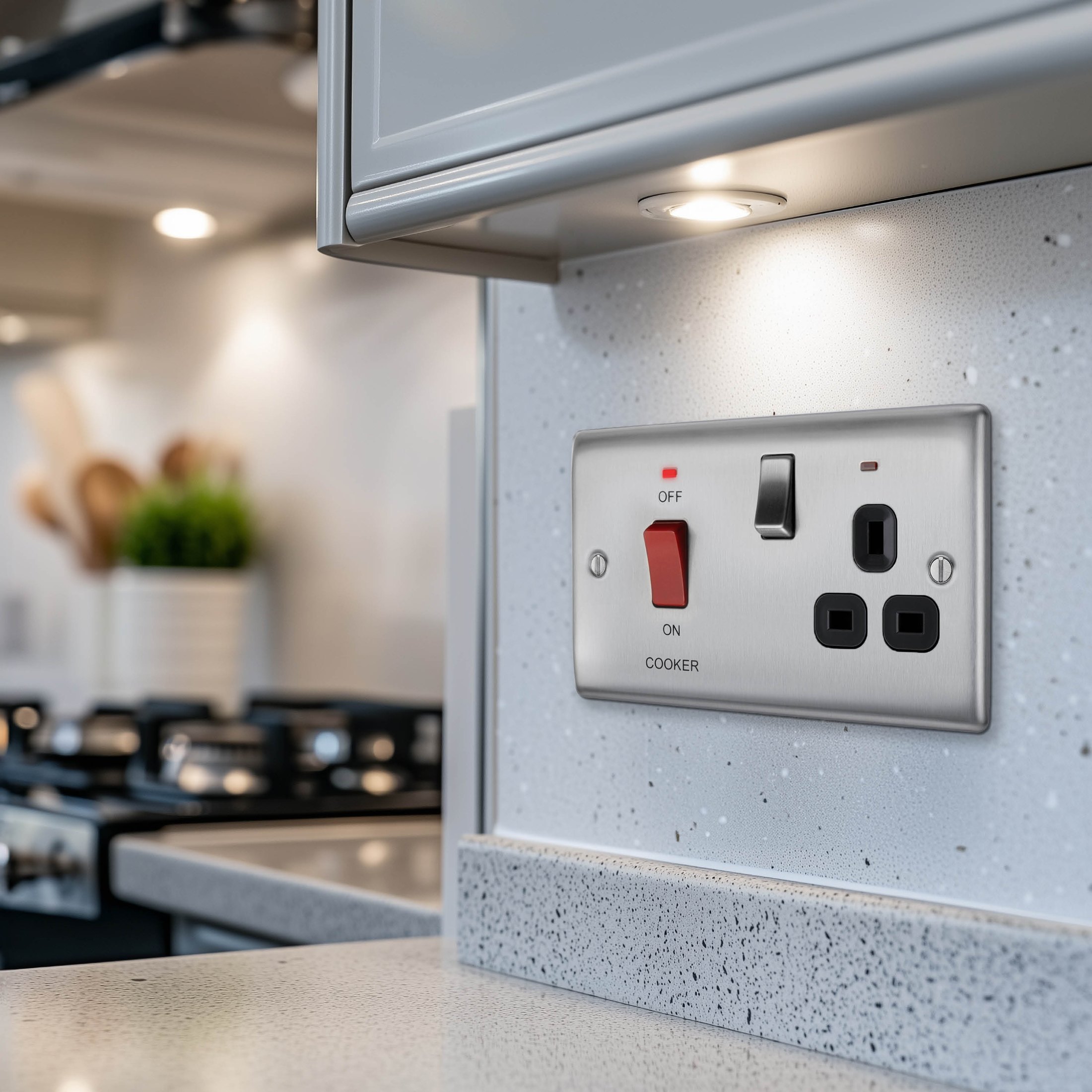
A cooker point isn't wired like a socket circuit. Ovens and hobs draw far more current than a kettle or a toaster, so they're normally run on their own dedicated radial circuit, sized and protected specifically for that load, and connected through a cooker control unit rather than a standard plug. When that circuit or its switch develops a fault, it doesn't behave like a tripped socket circuit. Treat it with the same respect you'd give any high-current circuit in the house.
The most common call we get is a cooker that trips the moment the oven heats up or the hob is switched on, while everything else in the kitchen stays live. That's usually a fault developing inside the appliance itself: a failing heating element, a damaged connection at the terminal block, or moisture getting into a component, rather than a problem with your house wiring. Cooker switches and control units fail too. Contacts inside them wear, arc, or work loose after years of daily use, and a switch that feels warm, buzzes, or shows scorching around the faceplate is telling you the connection inside is breaking down.
Induction hobs bring their own quirks. They generate a lot of electrical noise as part of how they work, and on some installations that's enough to trip a sensitive RCD with no genuine earth fault present. Telling a nuisance trip like that apart from a real fault in the hob or its wiring takes a proper insulation resistance test, not guesswork. Get it wrong either way and you're in trouble — leave a dangerous fault live, or pay to replace a hob that was never actually broken.
Signs & Safety
Cooker circuits carry a lot of current, so faults rarely stay quiet for long. Here's what to watch for.
Switch the cooker off at the wall-mounted cooker switch. If it trips again the moment you turn it back on, leave it off; don't keep resetting it hoping the fault will clear itself. Isolating the circuit at the consumer unit is the safest way to make things safe until we arrive, but only do this if you can confidently identify the right breaker. If you're not sure, the cooker switch is enough. Leave it off and call us.
Leave the switch, control unit and appliance alone if any of them feel warm, buzz, or show scorching or discolouration. Don't open the appliance or the switch to look inside, since there's no safe way to inspect live components without the right test equipment. And resist the urge to keep resetting a tripping breaker. It doesn't fix anything; it just re-energises a fault that's already there.
Smell burning, see smoke, sparking, or scorch marks spreading? Get out of the kitchen, keep everyone else out too, and call 999 straight away. Once the fire service confirms it's safe, call us and we'll send an electrician to find the fault properly.
Call an Emergency Electrician NowWhat To Expect
Tell us what's happening. A real electrician picks up — evenings, weekends and bank holidays included.
You get a realistic arrival window and our call-out rate up front — before anyone sets off.
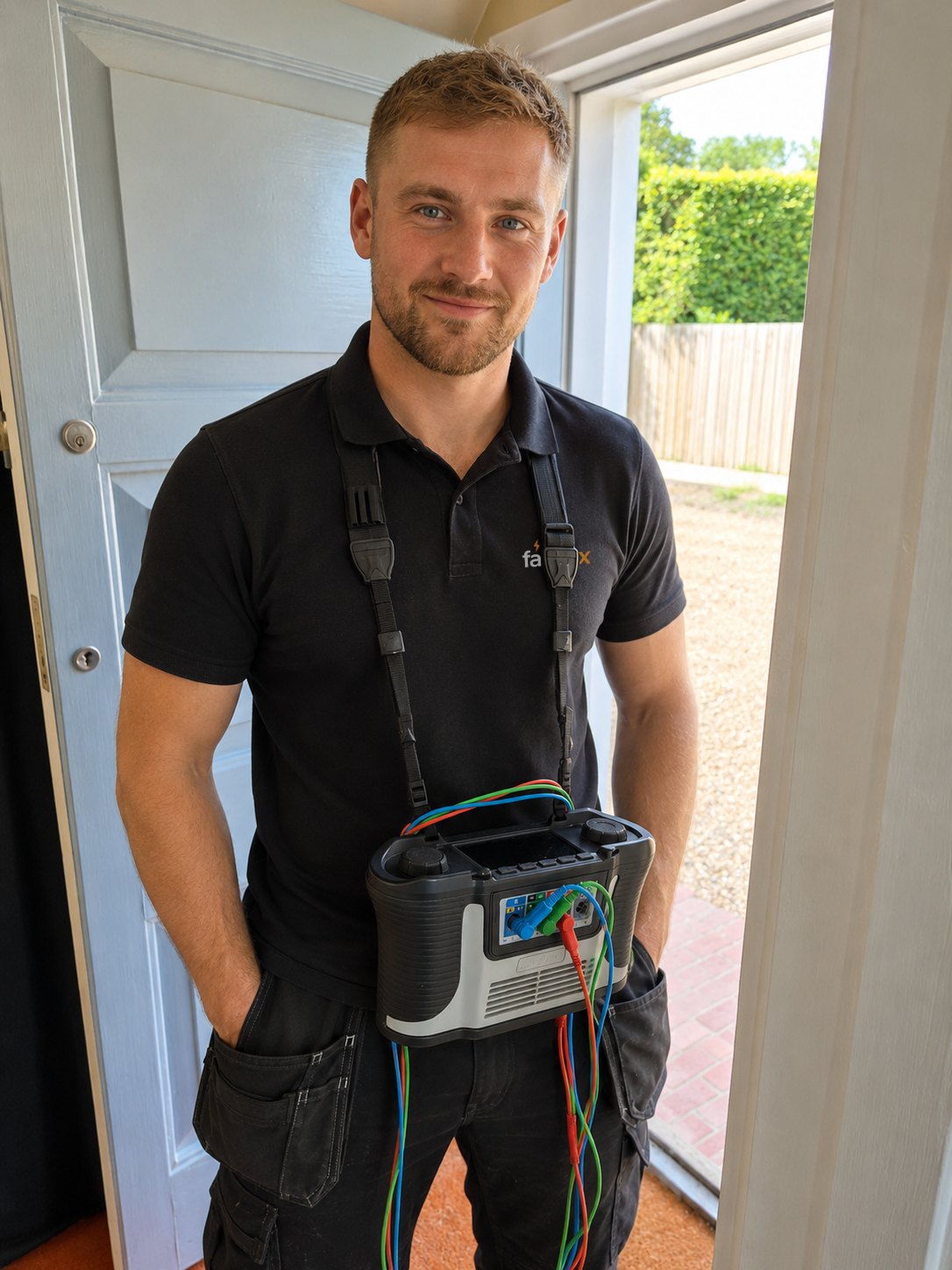
Safe isolation first, then testing to find the actual cause — explained to you in plain English.
Stocked vans fix most faults on the first visit. Anything we can't finish that night is isolated and made safe.
Why Choose Us
Committed to Quality and Care
Proudly serving our community with reliable, high-quality electrical work you can count on.
Our qualified electricians bring expertise, safety and precision to every single call.
We respect your time and budget, delivering results without delays or excuses.
Transparent, upfront quotes — no hidden fees and no surprise out-of-hours mark-ups.
Evenings, weekends and bank holidays. The phone is answered when the fault actually happens.
Common parts carried as standard, so most emergency repairs are completed on the first visit.
FAQ
Feel free to contact us for more information
The oven and hob usually share a single circuit but wire in separately from that point, so a fault in the oven's heating element or thermostat can trip the breaker without the hob even noticing. That's a good sign, in one sense: it points to the appliance, not your house wiring. Only testing tells you exactly which component's at fault, though.
Every reset sends power straight back into a fault that hasn't gone anywhere. A circuit that trips repeatedly is doing exactly what it's designed to do: detecting a problem and cutting power before it turns into something worse. Reset it again and you're not fixing the failing element or damaged connection behind it, you're just giving the fault one more chance to get worse rather than better.
Induction hobs generate electrical noise simply by working normally, and on some circuits that noise alone is enough to trip a sensitive RCD with no fault present at all. From the kitchen, a nuisance trip like that looks identical to a genuine earth fault. Telling them apart needs a meter, not a guess.
Considerably so. Cookers and hobs draw far more current than typical socket appliances, so they run on their own dedicated radial circuit, with cable and a breaker sized specifically for that load, feeding a cooker control unit rather than a standard socket. A cooker fault needs an electrician who works with high-current circuits routinely, not a plug swap.
Treat it as urgent, yes. Warmth or buzzing at a cooker switch usually means a connection inside has worked loose or started arcing, and arcing generates heat right at the point of the fault. Left alone, that's a fire risk sitting a few inches from an appliance you use every day. Switch it off at the wall, don't go near it again, and get it looked at.
Emergency Call-Outs
Tell us what's happening and we'll tell you straight away whether it needs an electrician tonight or can safely wait until morning. No obligation either way.